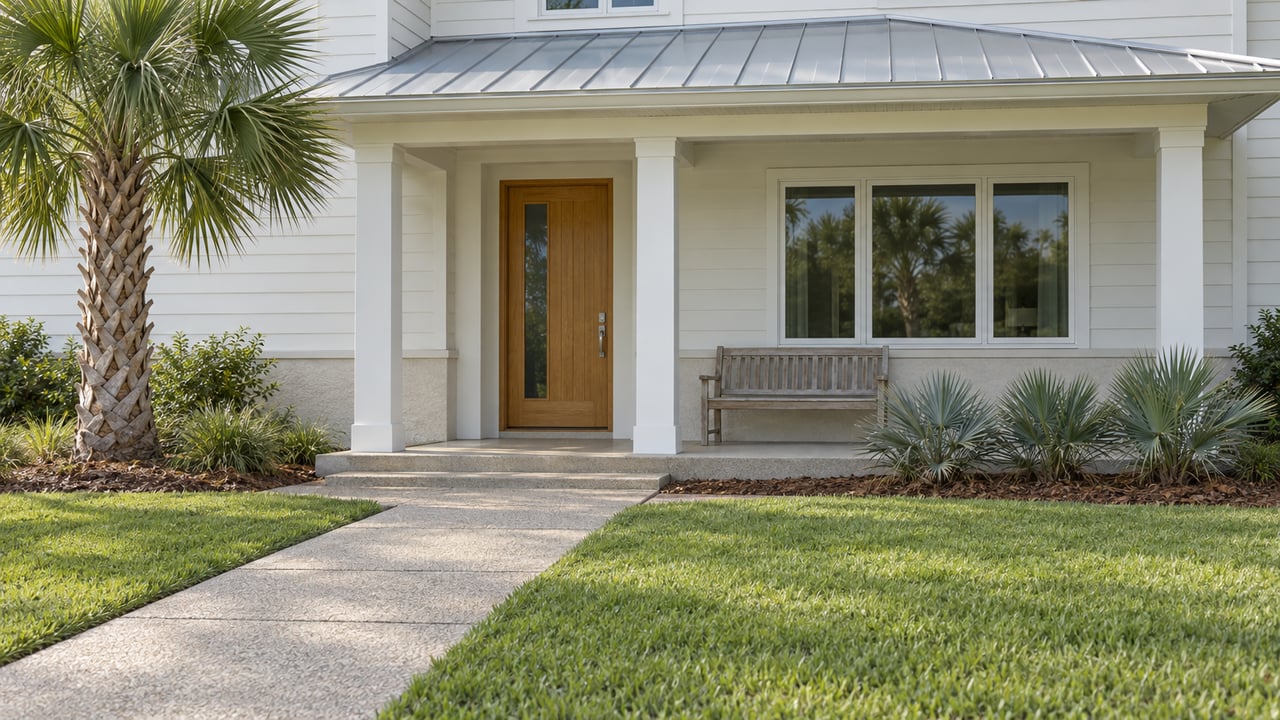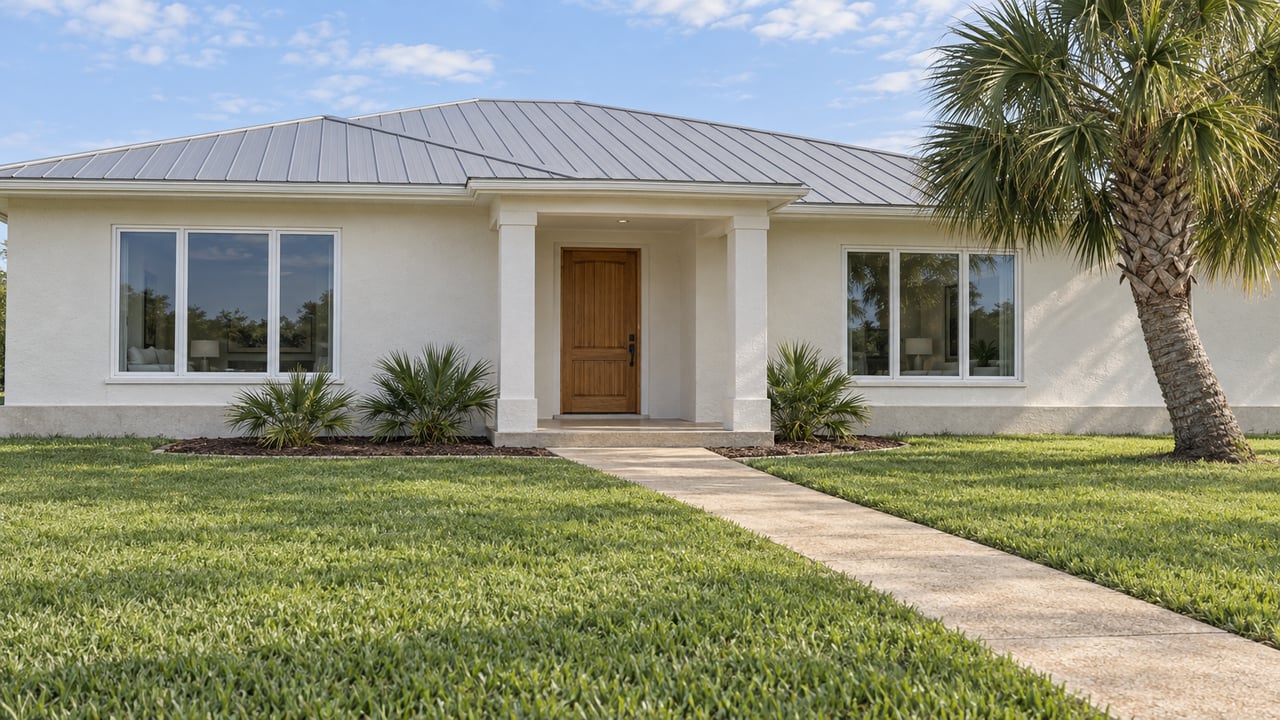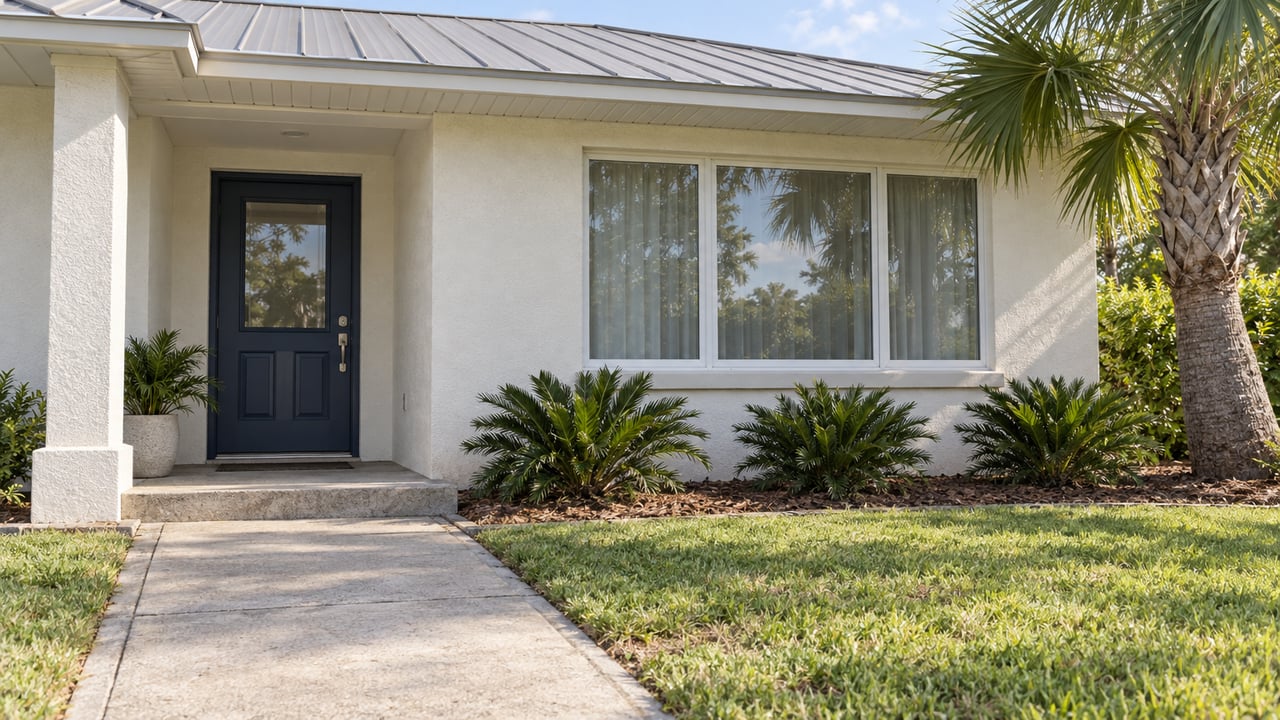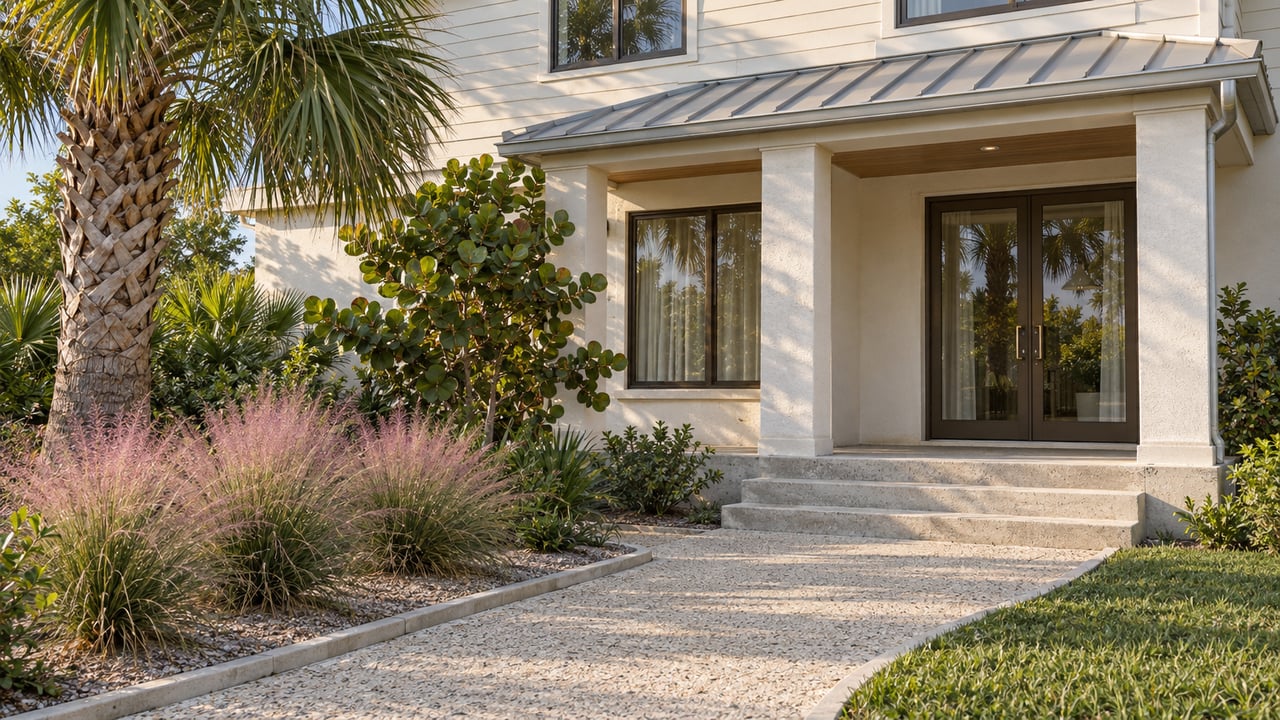
Along South Ponte Vedra Boulevard, between the private lots, St. Johns County owns a series of narrow strips of land, many of them just 10 feet wide. Most drivers heading south toward the Vilano bridge pass them without noticing. On October 7, 2026, the county held a community meeting and showed a concept that would put a wooden walkover and a trolley stop on several of those strips, with a small bus running from the Guana South Beach lot down to Vilano Beach Town Center.
The county's own slides show the trolley is mostly a beach-funding plan. Each stop is designed to lower the share of future sand bills that falls on local taxpayers, and the bus has to be running before the next big renourishment if it is going to count.
The Bill the Trolley Is Meant to Shrink
The county's Coastal Trolley Project page explains the reasoning directly. When the U.S. Army Corps of Engineers sets the local cost share for a federal beach project, one of the main factors it weighs is how much public beach access exists inside the project area. Add public access and the local share drops.
Two projects are involved. One is new: the Ponte Vedra–South Ponte Vedra coastal storm risk management project, a 50-year Army Corps effort. The other is the existing South Ponte Vedra and Vilano Beach project, which has already completed two nourishment events. Here are the figures from the October 7 presentation:
| Project | Price level used | Total cost | Local share today | Local share with trolley stops | Local savings |
|---|---|---|---|---|---|
| New PV–SPV project | October 2023 | About $138.3 million over 50 years | $94.8 million | $65.5 million | $29.3 million |
| Existing SPV and Vilano project | October 2026 | About $74.3 million through 2071 | $37.6 million | $31.5 million | $6.1 million |
On the new project, the county's PV–SPV project page says trolley stops would reduce the local share to 47%, down from 69%, which raises the combined federal and state portion from 31% to 53%. The deck also says $14.4 million of those savings would come during the initial nourishment alone. Its summary slide states the county's position plainly: "The current local cost share for the upcoming PV-SPV CSRM is very high, and we are looking for ways to decrease the local share."
Compare those numbers with the price of the trolley. A May 18, 2026 Tourist Development Council packet put preliminary initial construction at $2 million to $4 million and listed it as unfunded. Even at the high end, that is a fraction of the $29.3 million projected savings on the new project, before counting the $6.1 million on Vilano's existing one. The arithmetic explains why the county is exploring a bus line along a road that has never had one.
Why a Bus Stop Counts as Beach Access
Florida's rules show how this works in practice. In a July 2026 county application to the Florida Department of Environmental Protection, the state's eligibility instructions count "units" of public access within a quarter-mile walk of a beach access point. One unit can be one automobile parking space, one mass-transit stop, one non-beachfront lodging rental unit, or four bicycle parking spots.
The same instructions cap how far eligible shoreline can extend: no more than half a mile in each direction along the shore from a primary access, and a quarter mile from a secondary access, with no overlap. A stretch of private oceanfront with few public entry points earns little credit. A stop with a walkover every so often can change that, and building a stop is far easier than finding room for a new parking lot. The presentation says the trolley would provide public access that "meets the USACE and FDEP requirement for public access to benefit cost share," and it describes the northbound stop locations as chosen "to maximize cost share."
Parking near Vilano is already limited. The county's beach access inventory lists 37 regular spaces and 3 ADA spaces at Vilano Beach. Vehicles on the beach at Vilano are capped at 45, and no vehicle access is allowed at Porpoise Point. North Beach Oceanfront Park is listed as "closed until further notice."
What Vilano Would See at Its End of the Line
Everything in the concept is preliminary, and the county marks every stop "subject to change." As presented on October 7, the plan includes:
- Two turnarounds: the GTM South Beach Parking lot, which is ADA accessible, and Vilano Beach Town Center.
- Six northbound stops on 10-foot county-owned rights-of-way, with pickup and drop-off on the east side of South Ponte Vedra Boulevard.
- Two southbound stops: a gas station parking lot and North Beach Park, both at accesses with existing crosswalks.
- Four more possible northbound stops at existing pedestrian beach accesses.
- Possible future expansion to downtown St. Augustine, with stops such as the Serenata North lot, the GTMNERR visitor center, and the Vilano Beach Pier.
The FAQ slides describe what the new stops would look like. There would be no restrooms. The boardwalks would have railings and signs to keep beachgoers off neighboring private property, but no fencing, which the county says is not typical for its boardwalks. Signs would mark the trolley stop, along with "No Public Parking" signs and any others FDOT requires. Bike racks are in the design. Because of space limits, the six new stops are not planned to include ADA beach ramps, so riders who need one would use the Guana lot or Vilano Town Center, which both already have ADA ramps.
The trolley would run only in daylight, with special holiday schedules. The county says the access points themselves would never be closed or restricted.
The Questions Still Open
The biggest unanswered question is where riders would park. The FAQ says off-site parking "is currently being evaluated by County staff." Beachgoers raised that issue before the meeting even happened. In a September 22 report, Action News Jax found mixed reactions. Some of the people it interviewed pointed to how little parking the area has and said a trolley could help with mobility. Others wondered whether riders would have to pay and said they would rather go to a beach where they could park.
Several other basics are also undecided. The presentation names no operator, operating budget, or vehicle. Service frequency will be "determined by public input and USACE requirements." The deck does list possible funding for the beach restoration itself: Army Corps appropriations, the FDEP Beaches Program and state appropriations, Tourist Development Taxes and, if needed and approved by the Board, participation by homeowners through an MSTU or MSBU. Every dollar of local share the trolley removes is a dollar those local sources would not have to cover.
The Clock Runs Toward Summer 2029
Timing is what makes this concept urgent. Here is how the schedule fits together:
- December 10, 2023: The Army Corps finished placing about 1.1 million cubic yards of sand along three miles in the Vilano renourishment.
- October 7, 2026: The county presented the trolley concept and said no decision has been made on stops or on whether to pursue the idea at all.
- November 2026: Pre-construction engineering and design for the new PV–SPV project is scheduled to begin. The project needs easements from 251 private parcels and plans an initial placement of 2.15 million cubic yards of sand.
- Summer 2029: The estimated start of initial renourishment. The county says the trolley would need to be in place before then to get the most cost-share benefit.
That leaves less than three years for funding, design, permits, agency reviews, and construction that has to work around sea turtle nesting season. The county lists all of these as factors in the still-undetermined timeline. The existing Vilano project shows why the sand matters. The county notes that its first nourishment in 2020/2021 was severely affected by a nor'easter before the second event in 2023/2024.
The county is still taking feedback, and no deadline has been posted. You can reach St. Johns County Coastal Management at 904-209-0260 or [email protected]. Stephen Hammond, the department's deputy director, is listed as the contact on the presentation, and the meeting recording and slides are on the county's trolley page.
This post is general information about a public proposal. It is not legal, tax, or financial advice, so please check how any future assessment would apply to your property with the right professional.
If you own on South Ponte Vedra Boulevard or near Vilano Town Center and want to understand how beach access, renourishment schedules, and coastal projects come up when you buy or sell, the Noah Bailey Group is glad to walk through it with you. Contact us any time.